Land of the Ice Bears: Expedition to Arctic Svalbard

This blog chronicles my expedition aboard the National Geographic Explorer to Arctic Svalbard. This opportunity was made possible through the Grosvenor Teacher Fellow Program. The program is a partnership between National Geographic Education and Lindblad Expeditions. The program is named in honor of Gilber Grosvenor, Chairman Emeritus National Geographic Society and Education Foundation Board. The goal of the program is to advance geographic literacy by engaging K-12 educators in field-based experiences that will be reflected in their teaching practice and shared with their professional and community networks

Sunday, August 31, 2014

Wow!! Ice As Far As The Eye Can See

June 25th Pack Ice/Austfonna Ice Cap
                 

This morning we were gently awoken from our slumber
 by the smooth and silky voice of Stephanie at 0430. We raced to get warm clothes on, cameras and binoculars, in order to see the swimming polar bear.                


Bearded Seal
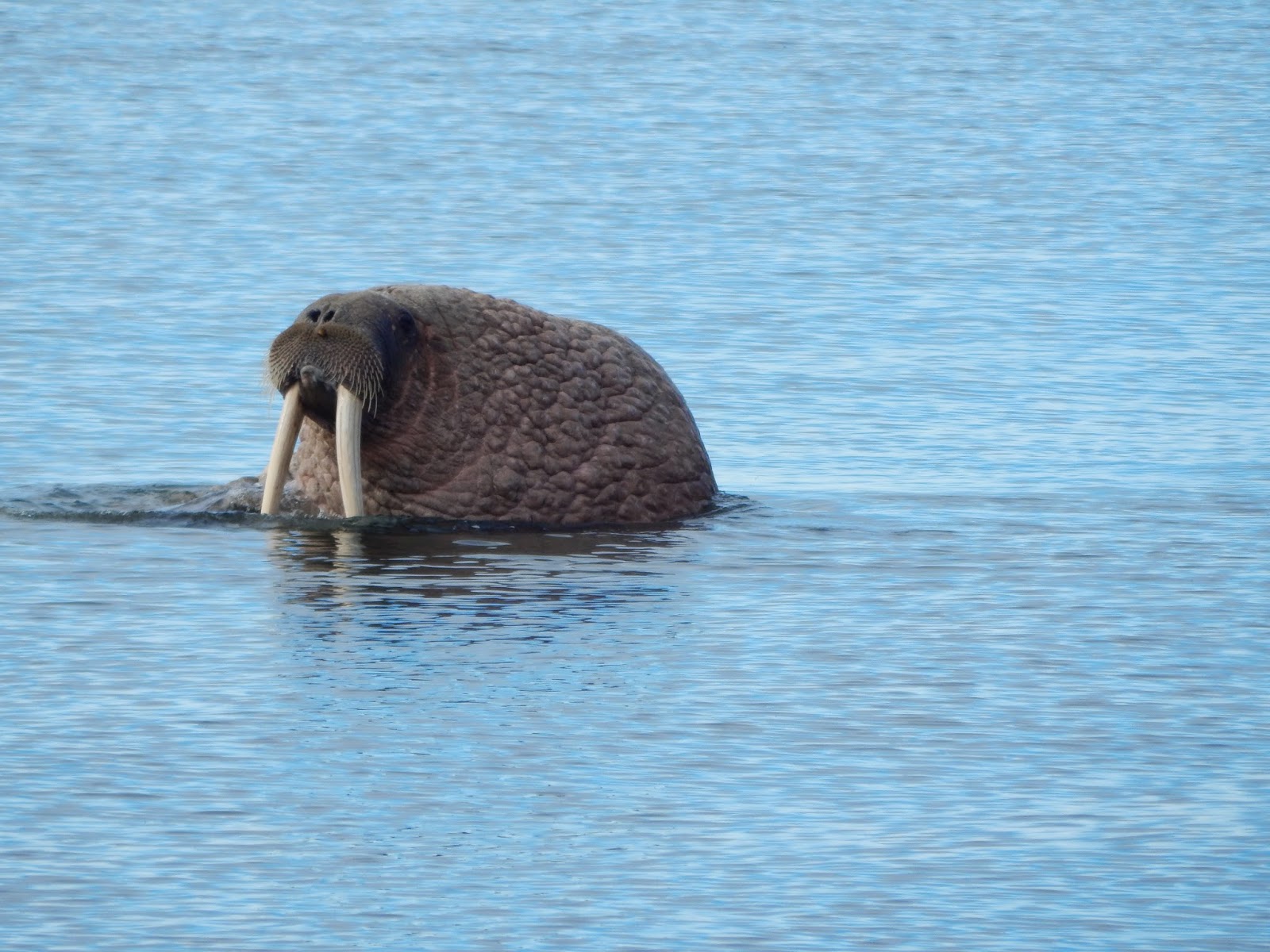
Later during the day we saw other wildlife such as a bearded seal and a walrus. Kittiwakes were keeping us company along  our cruise through the pack ice.
Walrus on ice


           Kittiwakes in flight            


After dinner we cruised alongside the glacial face of Bråsvellbreen, part of the Austfonna icecap. This icecap is the third largest in the world, and we cruised along several miles of the sheer face, with the captain taking the ship very close for awesome photographic opportunities.




Wednesday, July 16, 2014

Habenichtbukta & Kapp Lee, Edgeøya June 24, 2014

Today we step ashore on Edgeoya. We were met by curious reindeer. I don't think Santa will seek the help of these stubby legged animals to help pull his sleigh.  These reindeer, a unique subspecies only found in Svalbard, are short-legged as the snow is not very deep.

We watched as the reindeer grazed on lichen, grass and plants to rebuild a layer of fat in order
to make it through the next winter.


Later during the day we were in awe of the walrus grave yard. They were on the verge to extinction in the Barents Sea region because of the over hunting.
In 1970 Norway solidified plans to make Svalbard become one of the best-managed wildlife areas in the world.
They created protected closed areas, nature reserves, and national parks.

Saturday, July 12, 2014

Hornsund Fjord


June 23, 2014

Bird cliffs at Gnalnodden, Hornsund fjord.

Our first full day in Svalbard started with National Geographic Explorer cruising off shore on the west side of Spitzbergen, the largest island in this Arctic archipelago. An area with dramatic sheer cliffs, with thousands of nesting seabirds flying in and out, and beautiful Purple Saxifrage flowers blooming all around adding a pop of color to the landscape.
Purple Saxifrage